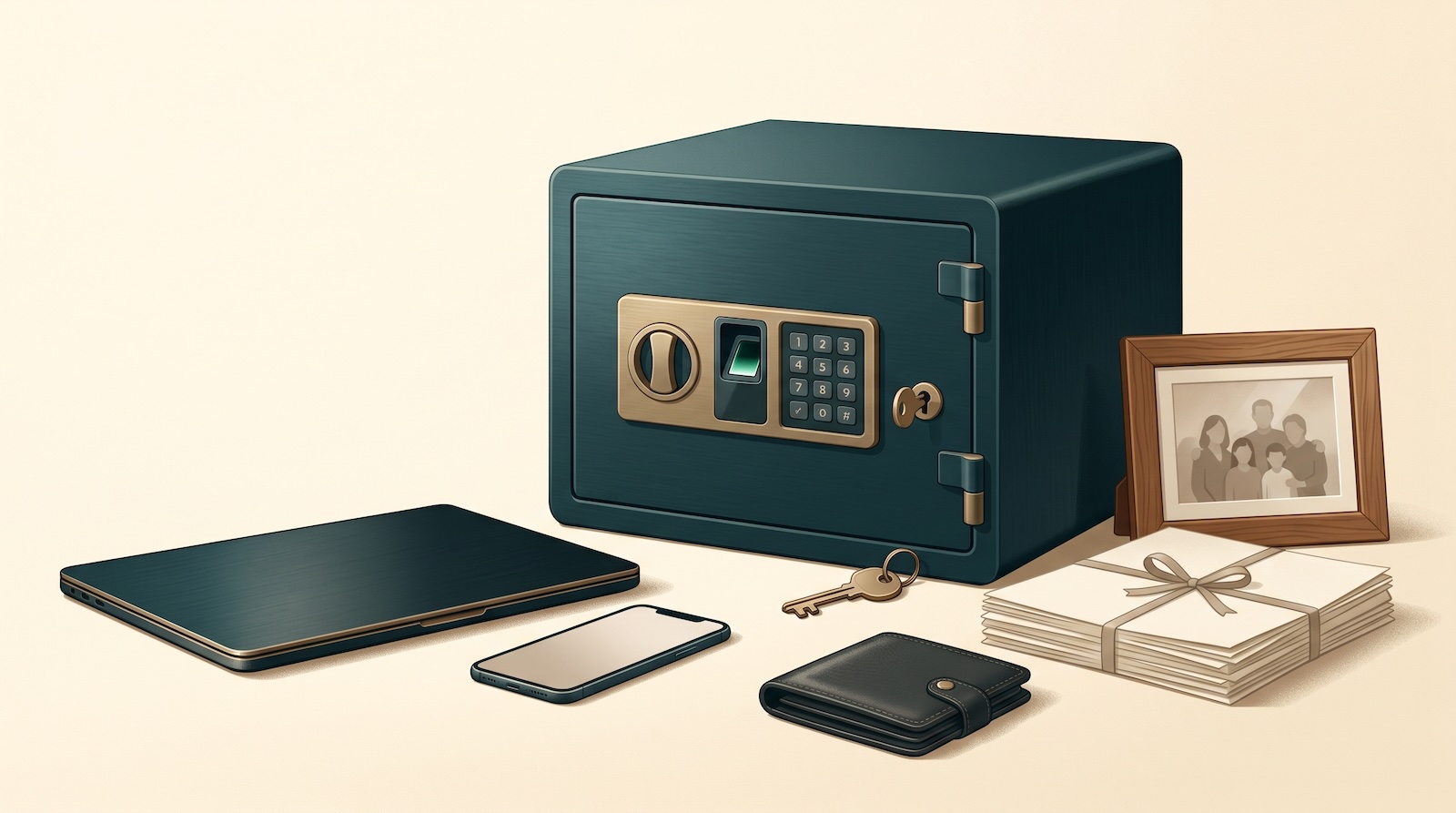
People have built whole financial lives behind logins. Most families still have no plan for inheriting them.
Americans now say their digital assets are worth $191,516 on average, according to Bryn Mawr Trust's 2024 digital assets survey. That sounds ridiculous until you stop reducing "digital assets" to crypto and start counting what people actually own online: domains, cloud storage, reward balances, subscription accounts, digital purchases, marketplaces, ad revenue, side businesses, photo libraries, and the credentials that unlock the lot.
Scale that across a population and you stop talking about a niche problem. Crypto alone briefly crossed $4 trillion in market value in 2025. The digital legacy market is already being pitched as a business worth more than $10 billion. Meanwhile, fewer than 15% of Americans say their estate plan covers digital assets, and 45% have never even heard the term digital estate planning.
That's not a minor paperwork gap. It's a breakdown in the system.
"Digital estate" is an ugly phrase, but the problem is real
The phrase sounds like consultant sludge. Unfortunately the thing behind it is real.
If your partner would need your phone, your inbox, your password manager, your recovery codes, and a small miracle to sort out your affairs after you die, you have a digital estate. The practical version of that work is digital estate planning: deciding what exists, who needs it, and how they get it without guessing. For the account-specific version, see what happens to online accounts when you die.
Crypto gets the headlines, but the harder mess is usually everything around it.
- The PayPal account nobody else used
- The Stripe dashboard tied to a side business
- The domain names on auto-renew
- The photo library sitting in iCloud
- The loyalty points that quietly expire
- The password manager that contains the map to everything else
- The 2FA app on the phone nobody can unlock
For a growing number of people, their business, their memories, and a decent chunk of their money all live behind the same wall: access.
Most people are undercounting the value
Part of the problem is psychological. Nobody gets a neat monthly statement for their digital life.
Your bank tells you your balance. Your broker tells you what your portfolio is worth. Nobody sends a clean report saying: here is the total value of your online business accounts, subscriptions, reward balances, app purchases, cloud archives, domain portfolio, crypto, and digital IP.
So people underestimate it, or they do not think of it as an estate problem at all.
That Bryn Mawr Trust survey found only 29% of Americans feel knowledgeable about their digital assets. That tracks. Most people know they have a lot of accounts. They do not know how much value is scattered across them, and they definitely have not planned what happens when they are no longer around to log in.
Why normal estate planning falls apart online
Traditional estate planning assumes the system on the other side will cooperate.
A bank recognizes executors. A land registry recognizes ownership. A court can issue paperwork, and there is at least a shared idea of what transfer is supposed to look like.
Digital services are all over the place.
Some accounts are legally transferable. Some are licensed, not owned. Some platforms offer legacy contacts. Others freeze or delete accounts once they are notified of a death. Some demand documents that vary by country and are a pain to assemble. Some have no usable handover process at all.
Then you hit the authentication layer.
Modern security works beautifully while you are alive. Passkeys, Face ID, hardware keys, authenticator apps, device binding, all good. Until the one person those systems were designed around is gone. Then the same security stack turns into a clean, elegant way to lock everyone else out.
That is the part people miss when they say, "My family can just use my password manager."
Maybe. If they know it exists. If they know how to unlock it. If the 2FA for the password manager is not tied to your phone. If your recovery method is documented. If your instructions are current. That is a lot of ifs for a moment when people are grieving and exhausted.
The real-world cost is boring, brutal, and expensive
This problem does not usually show up as a dramatic hack. It shows up as administrative chaos.
Subscriptions keep billing because nobody knows where they are. Business accounts sit untouched because nobody knows who owned what. Photos disappear into closed devices. Crypto sits in wallets that technically still exist and are practically gone. Email accounts become a liability because they contain the reset path to everything else.
And then there is the human mess.
Who gets access first. Who is allowed to close what. Which accounts should be preserved. Which ones should be deleted. Whether a social account has sentimental value, reputational risk, or commercial value. Digital assets create the same family disputes as physical ones, except with worse tooling and less legal clarity.
A password list is better than nothing, and still not enough
People tend to swing between two bad extremes.
One extreme is doing nothing and assuming a spouse or child will figure it out later. That is lazy optimism dressed up as trust.
The other is handing over a spreadsheet or a shared password vault and calling it solved. Better, but still fragile.
Credentials change. Accounts get added. Devices get replaced. 2FA moves. Recovery flows break. Business arrangements shift. A static file decays the moment life moves on.
A real digital estate plan needs at least four things:
An inventory. What exists, what matters, and where it lives.
Instructions. Not just how to log in, but what should happen next.
Release logic. Who gets access, to what, and under which conditions.
Maintenance. Because a plan that is two years out of date is mostly theatre.
What people should do now
Start with the unglamorous work.
Write down what exists. Separate personal accounts from business ones. Note what has financial value, what has sentimental value, and what should simply be shut down. Record how your authentication actually works, not how you vaguely remember it working. Leave instructions, not just credentials.
Then look at the weak point in almost every plan: transfer.
Who can act? What do they need first? What should happen in the first 48 hours, the first month, and the long cleanup after that? If your answer is still "they'll figure it out," no, they won't. Not cleanly.
This is exactly the hole Trustbourne is trying to fill. Not as a glorified password dump, but as a system for keeping digital legacy instructions current and making sure the right people can act when it matters. Here's how the check-in and release process works.
Because the problem is not that people own digital assets.
The problem is that they die like humans and plan for it like they are somehow exempt.
Your digital life is larger than you think. Sort it out before your family has to. Trustbourne helps you document what matters and get it to the right people when it counts.